

Why Do Dogs Eat Their Vomit: Normal or Worry? | Pawgram
Like Spending Time With Dogs? You Might Love This Money-Making Dog Walker Profession
Pawgram.pet
January 29, 2026
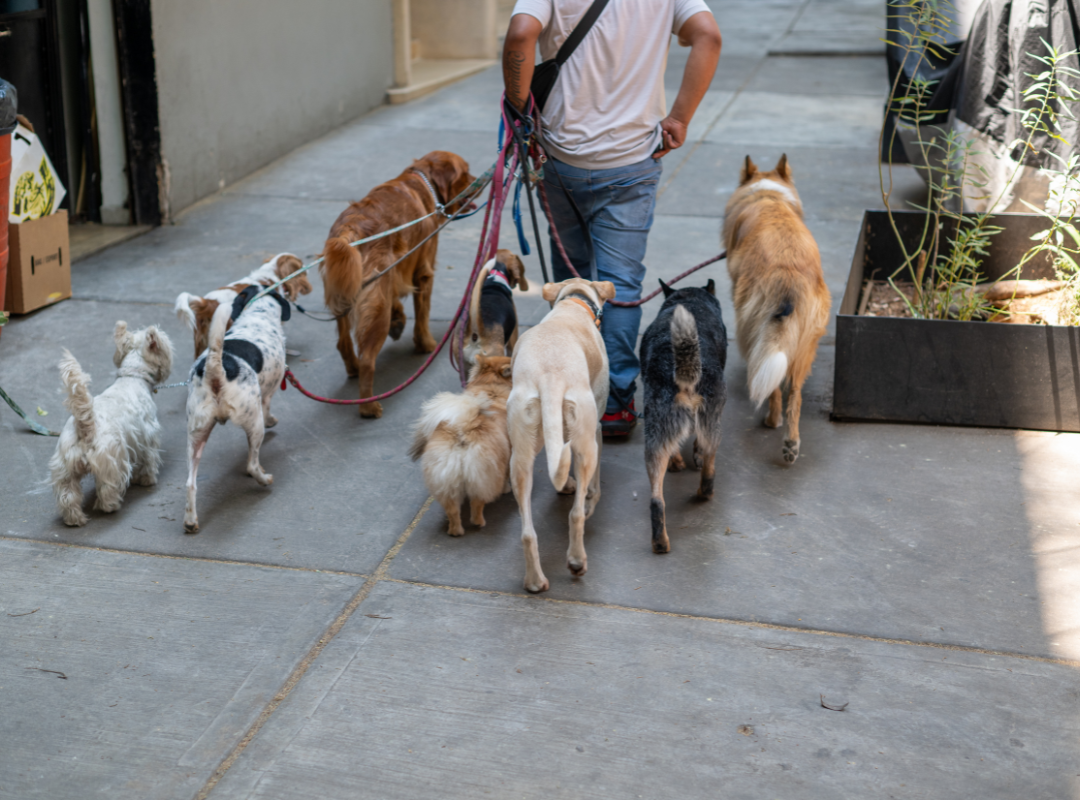
People often say, “If you love dogs, you’ll never feel alone.”
And honestly, that line hits even harder when you realise you can earn from spending time with dogs. Yes, in 2025, dog walking isn’t something only students or neighbours do casually. It has slowly shaped itself into a proper profession, especially in big cities where pet parents are juggling long office hours, hybrid work patterns, and hectic commutes.
This brings us to the question many people type into Google: how much do dog walkers make today, and is it worth considering as a career?
Let’s go step by step, without the usual sugar-coating.
Why Dog Walking Blew Up in India Over the Last Few Years
A lot changed between 2022 and 2025 in the pet world.
Pet adoption rates shot up, urban housing patterns shifted to smaller spaces, and families started treating dogs like real children. Naturally, the need for regular, structured walks grew too.
But here’s the important part: pet parents want consistency, not a random person walking their dog twice a week and vanishing on the third week. That gap created an actual job market, a reliable one.
Dog walking isn’t looked at as a “side thing” anymore. It sits under the urban service category along with grooming, pet sitting, and behaviour training.
Earning Potential: How Much Do Dog Walkers Make in December 2025?
Let’s get into the numbers first because that’s what everyone wants to know.
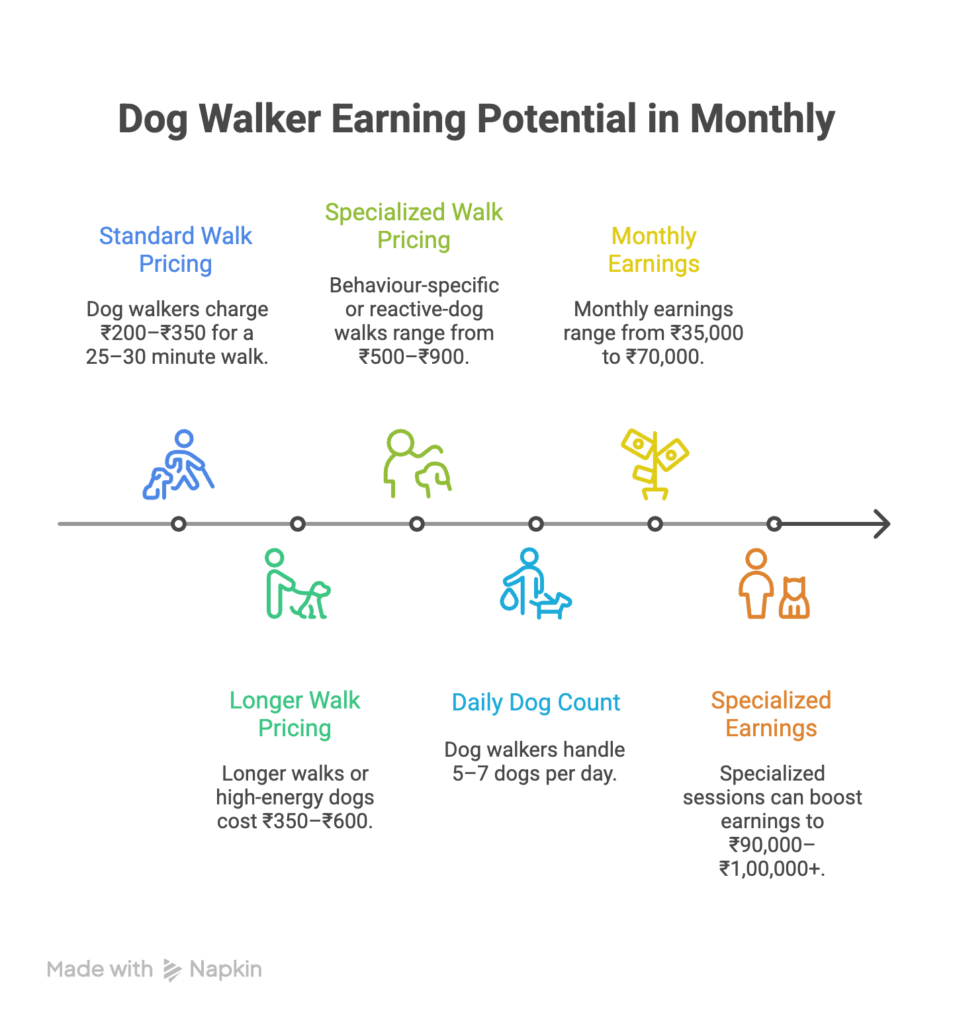
A typical dog walker in major cities like Mumbai, Pune, Bengaluru, Hyderabad, Chennai or Delhi NCR usually charges in this range:
- ₹200–₹350 for a 25–30 minute standard walk
- ₹350–₹600 for a longer walk or a high-energy dog
- ₹500–₹900 for behaviour-specific walking or reactive-dog walks
Someone who works with 5–7 dogs a day easily lands between ₹35,000 to ₹70,000 per month.
Professionals who take specialised walking sessions can climb to ₹90,000–₹1,00,000+ monthly, especially if they operate in premium societies.
That’s why the query on how much do dog walkers make keeps trending online, people are shocked when they realise this can become a stable living, not just a gig.
A Different Kind of Career Path: How to Become a Dog Walker
Many people see dog walking as “just walking around with a leash,” and that misunderstanding usually stops them from taking the first step. But dog walking in 2025 requires more structure.
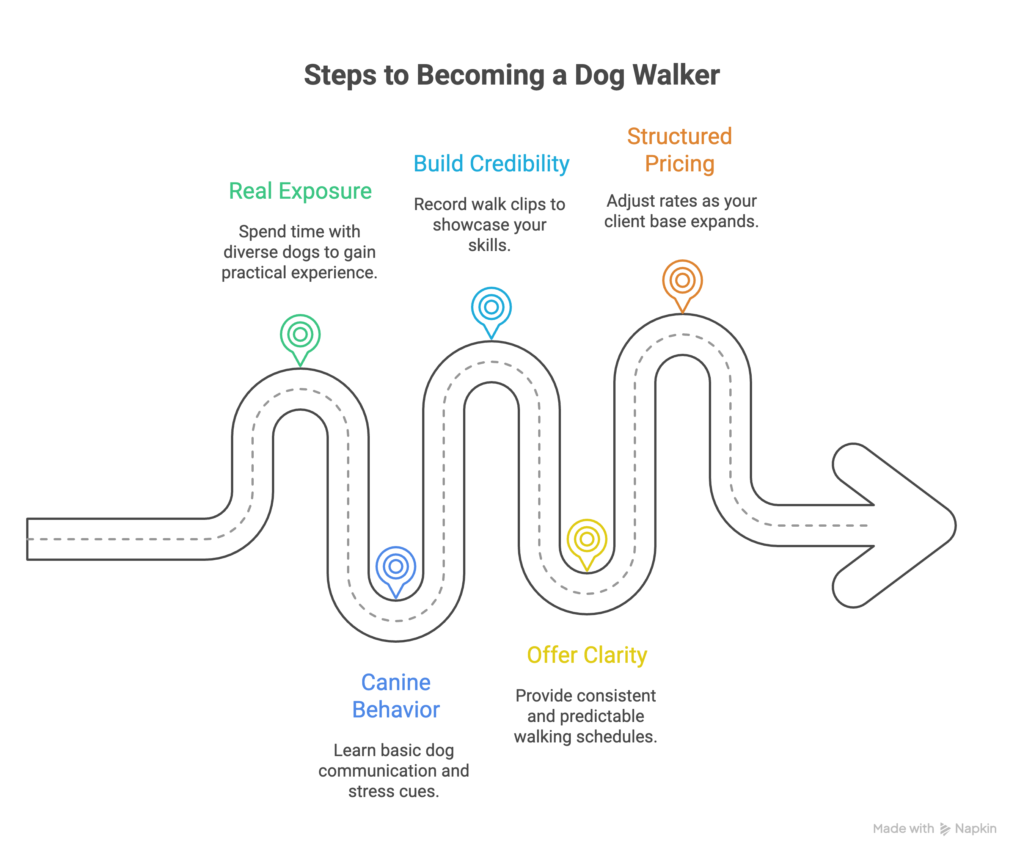
Here’s a more realistic breakdown of how to become a dog walker, without the over-training fluff:
Start with real exposure, not theory
Spend time with different dogs, large breeds, seniors, puppies, anxious ones. This hands-on understanding is what sets a reliable walker apart.
Learn basic canine behaviour
You don’t need a certificate right away. Just know:
- how dogs communicate,
- what stress cues look like,
- how leash pressure works, and
- when to avoid other dogs on the road.
Build simple credibility
Record walk clips, before/after progress, how you handle tough moments, or small improvements in the dog’s behaviour. Real proof beats fancy bios.
Offer clarity on timings
Most pet parents struggle when walkers are inconsistent. A professional walker sticks to predictable slots, morning, post-noon, evening.
Gradually move to structured pricing
Start with reasonable rates, then adjust as your client list grows.
People think how to become a dog walker is complicated, but honestly, it’s more about responsibility than anything else.
Where People Actually Find Dog Walker Jobs Near Me
The search term dog walker jobs near me skyrocketed in 2025.
Not just from job seekers, pet parents use it too, to find trusted walkers close to their area.
If someone is genuinely looking to begin, these are the actual places where opportunities show up today:
Neighbourhood Groups
Most RWAs and apartment societies have WhatsApp groups where pet parents ask for reliable walkers.
Local Pet Stores & Groomers
Owners often know who is hiring, especially in busy areas.
Pet Communities
Instagram pet pages, community-based pet networks, and locality-level dog groups are now major hubs.
Pet-care platforms
Many platforms actively onboard new walkers, especially in cities where demand is outpacing supply.
Anyone searching for dog walker jobs near me will find that openings today are hyperlocal, usually within a 1–3 km radius.
What Makes a Walker Stand Out in This Industry
Industry professionals often point out a simple truth about this field: dog walking is a trust-driven service.
Pet parents look for walkers who show reliability every single day, not just during the first week.
Walkers who stand out usually focus on:
- sticking to timings
- sending short walk updates
- not switching dogs too frequently
- being calm around reactive or anxious dogs
- using proper leashes instead of flimsy ones
- avoiding risky routes like crowded markets or main roads
Simple things, but these are the things pet parents talk about.
The Reality of Day-to-Day Work
Walking dogs is a mix of routine, unpredictability, and connection.
Some dogs are extremely easygoing, they trot, sniff, pee, and return home happily. Others need slow introductions, shorter warm-ups, or structured guiding on the road.
A professional walker knows that each dog has its rhythm, and adjusting to that rhythm is part of the job.
This is also why pet parents prefer trained walkers instead of occasional stand-ins.
How Pawgram Fits Into This Evolving Space
Since you’re reading this on Pawgram, here’s what matters.
The platform aims to make the pet-care experience more transparent, smoother, and safer for both sides. Pawgram’s approach is built around real interactions and expert-backed guidance, not just listings.
As the pet industry grows, Pawgram’s goal is to help pet parents and walkers understand modern standards. Clear communication, safety-first practices, and consistent care matter a lot, and that’s what Pawgram focuses on supporting.
Is Dog Walking a Good Career in 2025-26?
If you’re someone who connects naturally with dogs, this profession fits like a glove.
It’s flexible, scalable, and emotionally rewarding. And now that you know how much do dog walkers make, it’s easier to see that the earning potential has moved way beyond “pocket money.”
People exploring how to become a dog walker or checking dog walker jobs near me usually don’t realise that the industry is just getting warmed up. As pet parenting grows, demand for trustworthy walkers will grow too.
Dog walking isn’t a temporary trend. It’s an evolving profession, one that blends passion, routine, and purpose.
FAQ's Dog Walker Profession, Earnings & Career Guide
In major Indian cities, dog walkers earn anywhere between ₹35,000 to ₹70,000 per month by handling 5–7 regular dogs a day. Professionals offering specialised or behaviour-focused walking sessions can make ₹90,000–₹1,00,000+, especially in premium societies.
No, certification is not mandatory. What matters more is hands-on experience, understanding basic dog behaviour, and being consistent with timings. Certifications can help later, but beginners can start without them.
Most openings today are hyperlocal. You can find opportunities through:
Apartment & RWA WhatsApp groups
Local pet stores or grooming centres
Instagram pet communities
Pet-care platforms like Pawgram
Locality-based dog groups
These sources usually connect you with pet parents within a 1–3 km radius.
Reliability is the biggest skill. Walkers who shine in the industry:
Maintain consistent timing
Share quick walk updates
Understand stress cues and leash behaviour
Avoid unsafe routes
Stay calm with anxious or reactive dogs
Small habits create long-term trust.
Yes. With rising pet adoption, busy work schedules, and demand for consistent walkers, dog walking has become a legitimate profession, not just a side gig. It offers flexibility, steady income, and long-term growth—especially for people who naturally bond with dogs.
Most Popular Posts

Best Pet Shops in Hyderabad: Your Ultimate Guide for 2026

Do Dogs Need Winter Clothes? A Complete Guide for Pet Parents

Best Small Pets for Apartments: Quiet, Low-Maintenance & Space-Friendly Options
Why Do Dogs Eat Their Vomit: Normal or Worry? | Pawgram

Why Is My Dog’s Eye Red? Causes & Treatment | Pawgram

Best Aquarium Fish for Beginners Guide | Easy & Low-Maintenance Picks

- Pawgram is a loving space for pet parents. We share stories, tips, and care guides that help every paw live happier and healthier.
Contact US at bow@pawgram.pet
Copyright © 2025 Pawgram | All rights reserved.