If you’ve been a pet parent for even a few months, you already know the struggle: walking into a store or scrolling through a pet website and seeing a hundred different treats claiming to be “healthy,” “natural,” or “premium.” But when you turn the pack around, half the ingredients look like they belong in a chemistry lab.
That’s exactly why choosing the Best Dog Treats has become less about picking a flavour and more about figuring out what’s actually safe — and more importantly, what’s suitable for your dog’s breed. As someone who grew up with dogs and later ended up in the pet-content space professionally, I’ve seen the industry shift dramatically, especially through 2024–2025. Pet parents today expect clarity, clean formulas, and breed-specific logic, not generic marketing lines.
And that’s the mindset we’re building toward at Pawgram. This guide is here to help you navigate Safe Dog Treats for Every Breed, so you can make good choices without feeling overwhelmed.
Why Treat Safety Is No Longer Optional
For years, treats were the “fun” part of pet care, and nobody questioned much. But with rising cases of allergies, obesity, digestive issues, and artificial-ingredient recalls, Indian dog parents have become more cautious and honestly, that’s a good thing.
Vets today warn against:
- artificially coloured treats
- rawhide (still one of the biggest choking risks)
- high-sodium snacks
- treats with generic “meat by-product” labels
- synthetic preservatives that do more harm than help
Trusted bodies like the American Kennel Club and WSAVA regularly publish updates reminding pet parents that treats aren’t just rewards, they influence joint health, digestion, weight, coat, and behaviour long term.
Breed-Wise Guide to Safe Dog Treats for Every Breed
Different breeds process food differently. Some have delicate jaws, some have sensitive stomachs, and some will happily chew through your furniture if you don’t give them something appropriate. Here’s a simplified breakdown based on what vets and trainers commonly recommend.
Small Breeds: Shih Tzu, Pug, Maltese, Chihuahua, Lhasa
Small dogs love food, but they gain weight faster and struggle with harder textures.
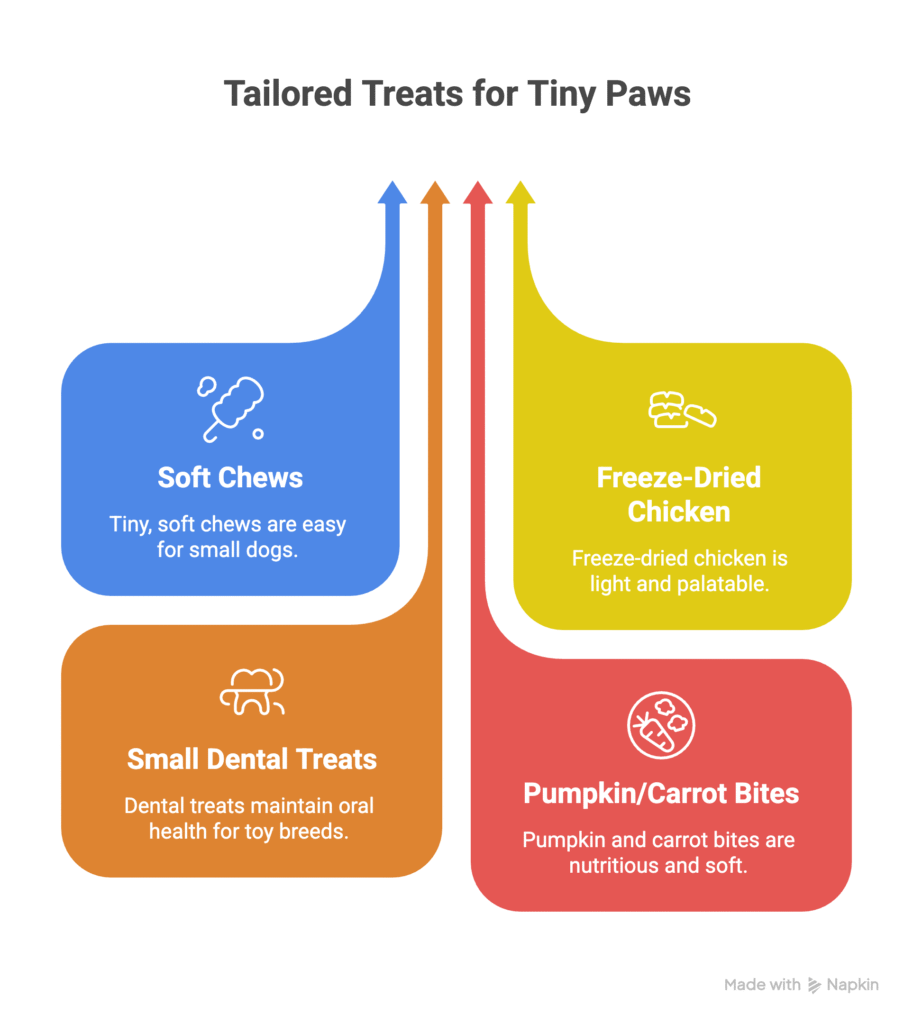
What actually works for them:
- tiny soft-chews
- freeze-dried chicken pieces
- small dental treats designed specifically for toy breeds
- pumpkin-based or carrot-based bites
What to avoid:
- giant biscuits
- hard bones
- fatty jerky
- treats meant for medium or large jaws
Small breeds do best when treats are light, easy to chew, and low in calories. When choosing from the Safe Dog Treats for Every Breed category, look for size-appropriate options that won’t stress their teeth.
Medium Breeds: Indie, Beagle, Cocker Spaniel, Border Collie
Medium dogs have the perfect mix of enthusiasm and energy, which means treats often double as training rewards.
They respond well to:
- single-protein jerky
- air-dried strips that aren’t too tough
- small training treats
- oat-based crunchy biscuits with low fat
What doesn’t suit them:
- heavily smoked products
- sugar-coated treats
- jerky made with artificial flavour enhancers
These breeds usually do well with the Best Dog Treats that balance protein and digestibility, especially if training is a regular part of their routine.
Large Breeds: Labrador, German Shepherd, Golden Retriever, Rottweiler
Anyone who has lived with a large dog knows one thing: their appetites have no limits. But they also have joint concerns and weight-gain tendencies, so their treats need to support their bodies, not stress them.
Best fits:
- large dental chews
- freeze-dried organ meat (in moderation)
- glucosamine or turmeric-based soft chews
- high-protein air-dried treats made for bigger jaws
Avoid:
- cooked bones
- rawhide rolls
- fatty leftovers masked as “treats”
Large breeds thrive when treats contribute to joint support and controlled calorie intake.
High-Energy & Working Breeds: Husky, Doberman, Belgian Malinois
These dogs burn calories faster than average and need treats that can keep up with their activity.
Good options:
- high-protein freeze-dried cubes
- fish treats rich in natural omega-3
- electrolyte-support chewables (especially during hot months)
Not advisable:
- grainy biscuits
- sugar-heavy treats
- anything with artificial smoke flavour
High-energy breeds benefit the most when treats match their training intensity.
Senior Dogs (Any Breed)
Senior pups need soft, gentle, anti-inflammatory support.
Ideal picks:
- soft turmeric or joint-care chews
- pumpkin or sweet-potato chews
- low-fat, easy-to-digest treats
Avoid:
- hard chews
- brittle bones
- treats requiring strong jaw pressure
The goal is comfort and easy digestion.
Ingredient Guide: What Works Across Most Breeds
These ingredients rarely go wrong:
- chicken
- fish
- pumpkin
- oats
- yogurt cultures
For sensitive stomachs:
- sweet potato
- single-protein sources
- probiotic-based treats
Ingredients worth skipping every time:
- rawhide
- artificial colours
- excessive sugar
- vague “meat meal” terms
Cross-check with WSAVA’s ingredient guidelines if you’re ever unsure.
How Often Should You Give Treats?
Most vets recommend keeping treats within 10% of your dog’s daily calories. It sounds simple, but a lot of pet parents forget that a few extra treats every day can quietly lead to weight gain or digestive issues.
A simple trick I tell new pet parents:
- break big treats into smaller pieces
- reserve treats for training or rewards
- space them out through the day, don’t stack them back-to-back
Consistency matters more than quantity.
Choosing the Best Dog Treats for Your Dog
Picking treats should feel reassuring, not confusing. When you understand your dog’s breed, energy level, sensitivities, and jaw strength, it becomes much easier to choose from Safe Dog Treats for Every Breed without second-guessing yourself.
Pawgram is gearing up to become the space where quality, clarity, and genuinely thoughtful pet care meet. Until then, this guide is your starting point. Make the choices your dog would thank you for, the ones that keep them healthy, excited, and wagging every single day.
FAQ's
Most Popular Posts