If you’ve just brought home a guinea pig (or are thinking about it), you’re probably asking yourself:
“Am I doing this right?”
“What does my guinea pig really need?”
Guinea pigs are gentle, adorable, and social pets — but they are not low-effort pets. They need the right food, space, companionship, and daily care to stay healthy and happy.
This guinea pig care guide for beginners will walk you through everything step by step — in simple, reassuring language — so you can confidently care for your furry friend at home.
Guinea Pig Basics: What Every Beginner Should Know
Guinea pigs, or cavies, make fantastic starter pets. They’re social, gentle, and thrive in apartments or small spaces.
How Long Do Guinea Pigs Live?
With proper guinea pig care, they live 5-8 years. Some even reach 10! Commit to this lifespan when adopting.
Do Guinea Pigs Need a Friend?
Absolutely—do guinea pigs need a friend? Yes. These herd animals get lonely solo. Get a same-sex pair to prevent depression. Bonded pairs groom and play together.
Are Guinea Pigs Good Apartment Pets?
Perfect for apartments. They’re quiet during the day (nocturnal-ish, active dawn/dusk), odor-free with good hygiene, and need less space than dogs or cats.
What Does a Guinea Pig Need to Survive?
What do guinea pigs need to survive? Four essentials: space, companionship, a balanced guinea pig diet, a clean home, and gentle handling. Skip these, and stress sets in. Nail them, and you’ll hear happy wheeks!
Guinea Pig Home Setup for Beginners
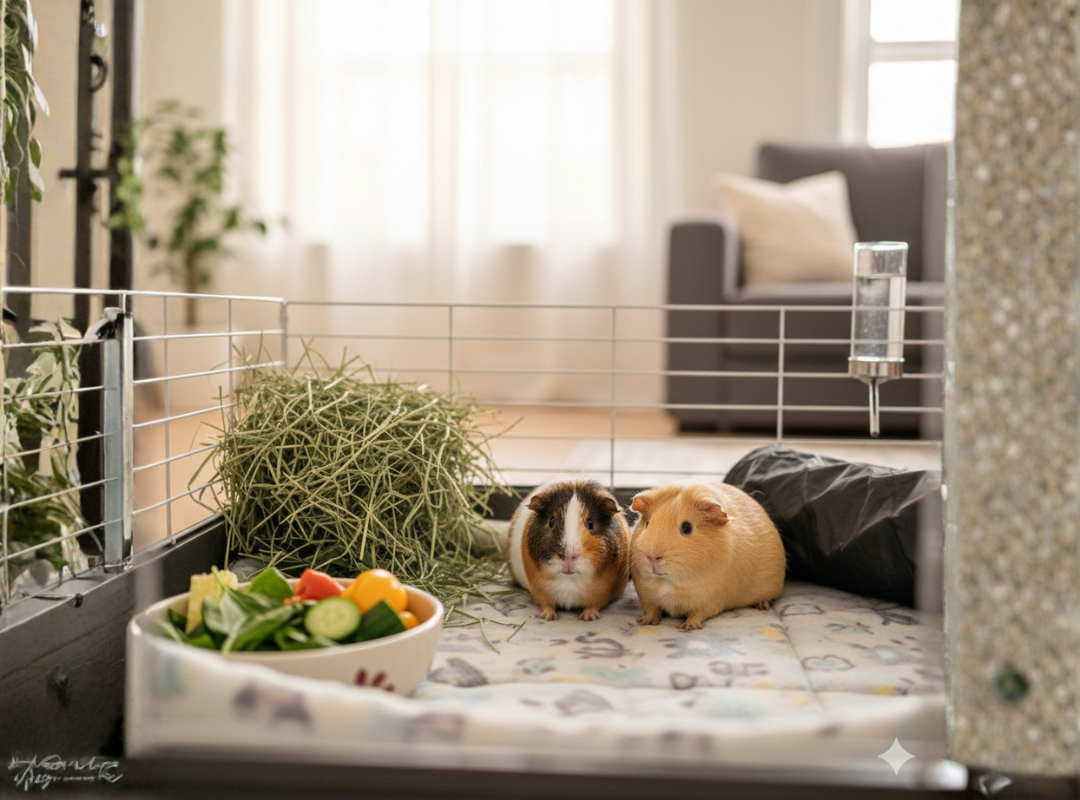
A solid guinea pig home setup prevents boredom and health issues. Start here for your guinea pig cage setup.
Best Cage Size for Guinea Pigs
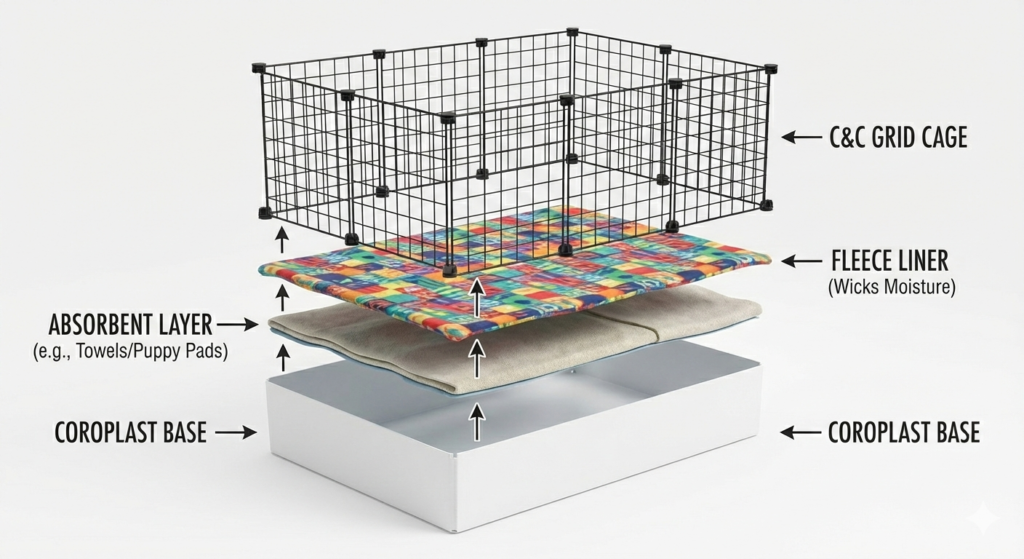
Go big: Minimum 7.5 sq ft for one (101×50 cm), double for pairs. C&C cages (cubes and coroplast) are affordable and customizable. Avoid aquariums—they lack airflow.
Guinea Pig Home Setup Cage, Bedding & Location
What Is the Best Cage Size for a Guinea Pig?
This is where many beginners make mistakes.
Bigger is always better.
Best Cage Types
Avoid tiny pet-store cages — they cause stress and illness.
Guinea Pig Bedding Types
Choose safe, absorbent options:
Paper bedding: Dust-free, soft (e.g., Carefresh).
Fleece liners: Reusable, cozy—wash weekly.
Hay: Orchard or timothy for burrowing (not pine/cedar—toxic).
Avoid wood shavings that cause respiratory issues.
Where to Keep Guinea Pig Cage at Home?
Room temperature (65-75°F/18-24°C), away from drafts, direct sun, kitchens (fumes), or loud areas. Elevate for easy cleaning in your indoor guinea pig cage setup.
Add hideouts, tunnels, chew toys, and ramps for enrichment.
Guinea Pig Diet: What Should They Eat Daily?
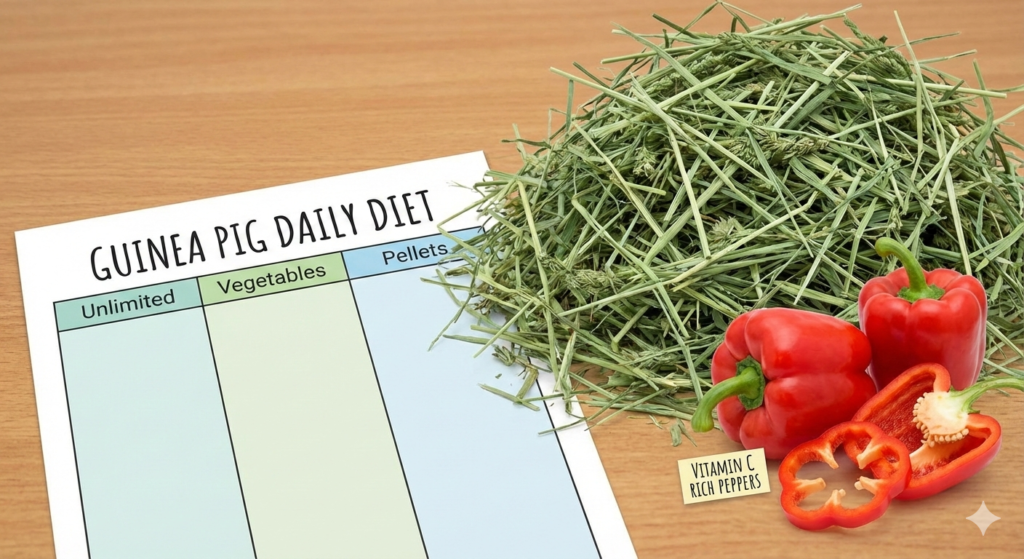
Diet is 80% of guinea pig care! What should I feed my guinea pig daily? Unlimited hay, veggies, pellets, and occasional fruits. They can’t make vitamin C—crucial for health.
Guinea Pig Diet Chart
| Food Type | Daily Amount | Examples |
|---|
| Hay (70% diet) | Unlimited | Timothy, orchard—how much hay should a guinea pig eat? 1 cup per 100g body weight. |
| Veggies | 1 cup/100g | Romaine, bell peppers (what vegetables are safe for guinea pigs?). |
| Pellets | 1/8 cup | Oxbow timothy-based, high-C. |
| Fruits | 1-2 tsp, 2x/week | Strawberries (what fruits can guinea pigs eat?). |
Vitamin C for guinea pigs: 25-50mg daily via peppers or supplements.
Foods Guinea Pigs Should Not Eat
Steer clear:
Iceberg lettuce (low nutrition).
Dairy, meat, onions, garlic.
Sugary treats, seeds.
A poor guinea pig food list leads to obesity or scurvy.
How Often Should You Clean a Guinea Pig Cage?
How often should I clean a guinea pig cage? Daily spot cleans keep it fresh; weekly deep cleans prevent odor.
Daily: Scoop poop, refresh hay/bedding, wipe water bottle.
Weekly: Full change, disinfect (vinegar/water), laundry fleece.
Odor tips: Use enzymatic cleaners, good ventilation.
Your guinea pig care at home stays simple and sniff-free.
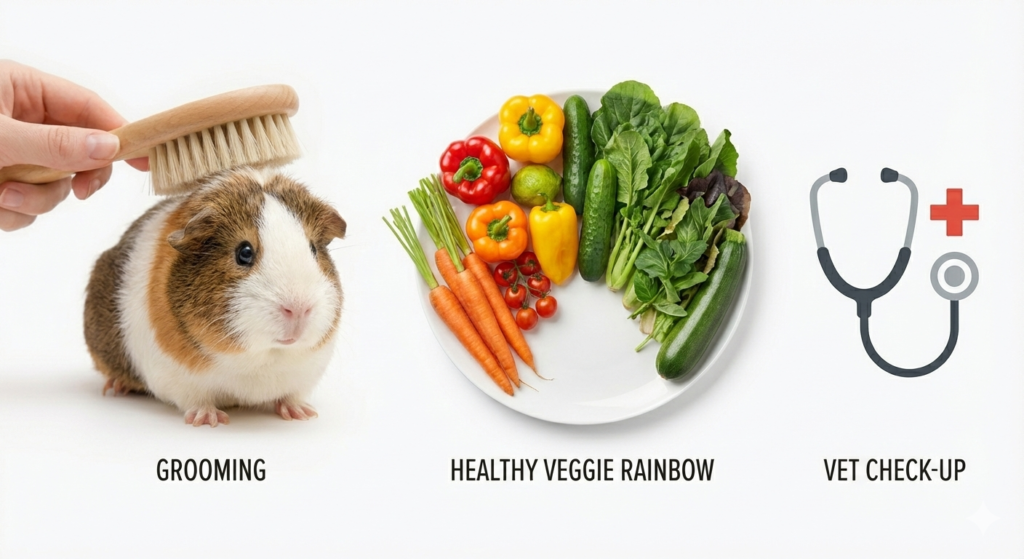
Guinea Pig Grooming & Hygiene
Brushing
Nail Trimming
Bathing
Not recommended unless advised by a vet
Guinea pigs get cold easily.
Guinea Pig Health Care: Spot Issues Early
Guinea pig health care means watching for trouble. How do I know if my guinea pig is sick? They hide pain, so check daily.
Common Guinea Pig Health Problems
Dental overgrowth (from low hay).
Respiratory infections (sneezing, wheezing).
UTI (blood in urine).
Signs of Illness in Guinea Pigs
Lethargy, hunched posture.
No appetite, diarrhea.
Hair loss, crusty eyes.
Vet visit at once—exotics specialist preferred. Annual checkups catch issues.
Handling & Bonding with Your Guinea Pig
How do you take care of a guinea pig at home? Gently! Let them sniff first, then scoop with both hands (one under bum, one chest). Daily 1-hour floor time builds trust. Teach kids: no squeezing.
Guinea pig care tips for beginners: Speak softly, offer treats—watch popcorning (joy jumps)!
Beginner Mistakes to Avoid in Guinea Pig Care
New owners slip up—here’s how to dodge:
Keeping one alone (can guinea pigs live alone? No!).
Wrong diet (no seeds!).
Tiny cages.
Skipping vitamin C for guinea pigs.
Ignoring vet care.
These guinea pig care tips for beginners save heartache.
Conclusion: Ready for Guinea Pig Parenthood?
Guinea pigs reward guinea pig care at home with endless wheeks and cuddles. From guinea pig diet to guinea pig grooming, this guide equips you. How to care for a guinea pig for beginners? Start small, love big, and consult vets. Is a guinea pig right for you? If you crave a chill, social companion, absolutely. Adopt responsibly—your new bestie awaits!
FAQ's
Most Popular Posts